Starfront · Field notes
Ten nights on Andromeda
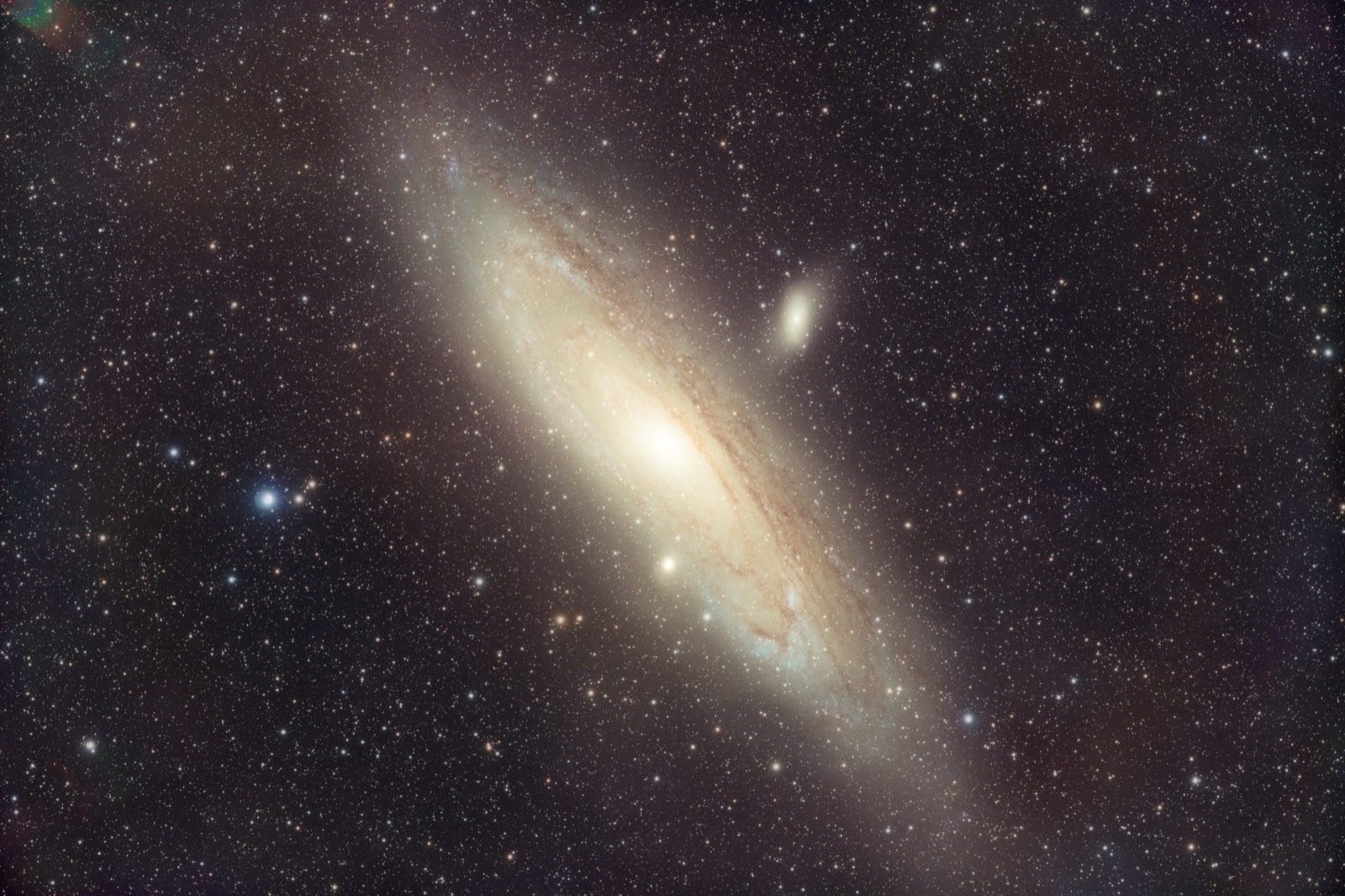
I photographed this galaxy from Chicago with a telescope in Texas. Each exposure lasted at most a minute. The finished image holds more than twenty hours of light.
I built Starfront with Codex to help me plan observing nights and work through thousands of frames. For this photograph I took three of the resulting stacks into PixInsight, where I decided how the galaxy and its stars would look together.
Planning & capture
Returning to the same field
I framed Andromeda’s central disk with my RedCat 91 telescope. My camera records one filter at a time, so a color photograph meant returning to the same patch of sky and collecting light through red, green, and blue filters. I could spread the work across nights and still combine the exposures later.
At the observatory, N.I.N.A. ran the capture sequence. It centered the field and coordinated focusing, guiding, and filter changes. Ten nights between July 18 and September 15 contributed to this print, with a gap of several weeks between the July and September sessions.
See the ten observing nightsProcessing with Codex
From 2,060 frames to three
After capture, I used Codex to help manage the stacking runs. The software aligned exposures taken weeks apart and combined them by filter using a technique called drizzle. On October 14, each run produced one master image and a report listing the frames that went into it.
| Filter | Frames | Exposure time |
|---|---|---|
| Red | 691 | 6h 49m 30s |
| Green | 689 | 6h 47m |
| Blue | 680 | 6h 40m 30s |
| Total | 2,060 | 20h 17m |
My decisions in PixInsight
Finishing the galaxy and the stars
For this version I chose the red, green, and blue masters. I also had luminance and hydrogen-alpha data, which I left out of this composition. The twenty hours in the caption count only the light that made it into the photograph.
In PixInsight I worked on the galaxy and the stars separately. That let me adjust the brightness and contrast of Andromeda’s disk and its dark dust lanes independently of the surrounding star field. I brought the two layers back together with a screen blend and published the photograph on October 18.
Explore the full-resolution photograph and processing notes